

The Macro Shift: How Interest Rates Redefined 2025
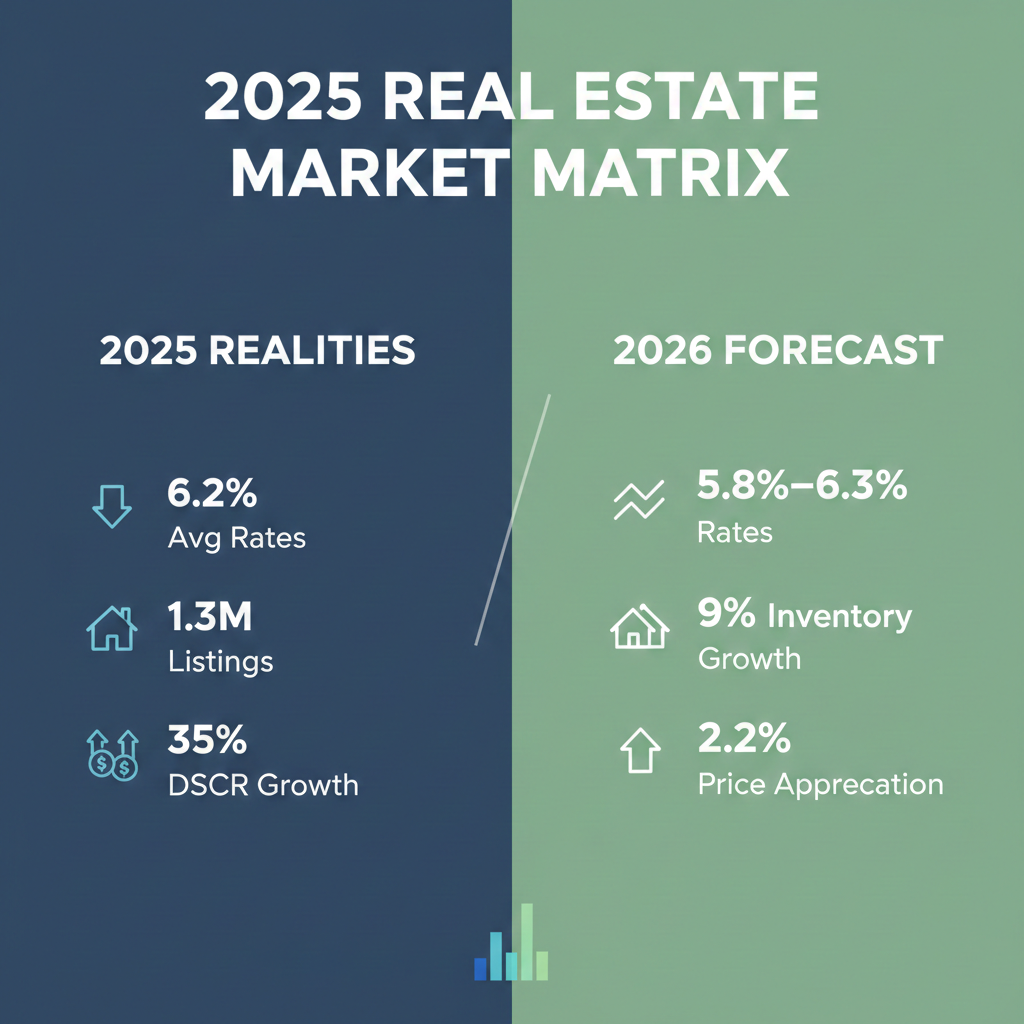
The 2025 fiscal year was defined by a departure from the “wait-and-see” paralysis of previous periods. As of late December 2025, the 30-year fixed mortgage rate averaged approximately 6.18%, a significant decrease from the nearly 7% levels seen at the year’s start. This downward trend, spurred by Federal Reserve rate cuts in late 2025, lowered the benchmark target range to 3.50%–3.75%. For investors, this meant a narrowing of the spread between borrowing costs and cap rates, finally reopening the door for cash-flow-positive acquisitions in markets that were previously “underwater” on paper.
The Rise of the DSCR Loan: 2025’s Dominant Financing Vehicle
2025 was officially the year of the Debt Service Coverage Ratio (DSCR) loan. Sophisticated investors pivoted away from restrictive conventional financing, which often required 45+ days to close and exhaustive personal income verification. Instead, the Non-QM market surged, with DSCR originations increasing by nearly 35% annually.
Lenders in 2025 typically required a minimum DSCR of 1.20, though aggressive programs emerged for “break-even” properties (1.00 DSCR) in high-appreciation zones. The speed of execution—often 10 to 21 days—became a competitive moat for investors targeting off-market deals.
Market Dynamics: Inventory Surges and Rent Moderation
Data from late 2025 indicates a significant rebalancing of supply. Active listings climbed to approximately 1.3 million units by November, representing a 12.6% annual increase. However, this supply surge was met with a cooling rental market. National Single-Family Rental (SFR) growth decelerated to a 15-year low of roughly 0.9%, forcing investors to be more meticulous with their Net Operating Income (NOI) projections.
Preparing for 2026: The Investor’s Tactical Playbook
As we look toward 2026, the consensus among economists suggests a “balanced” market. Mortgage rates are forecast to settle into a stable range of 5.7% to 6.3%.
Key Strategies for 2026:
- Focus on Value-Add: With rent growth slowing, “alpha” will be found in physical improvements that justify higher-than-market premiums.
- Leverage Hybrid Products: Watch for 5/1 and 7/1 ARMs, which may offer lower entry points for short-to-medium-term holds.
- Geographic Arbitrage: Markets in the South and Midwest are expected to outperform as inventory recovery elsewhere remains lumpy.
FAQ: Navigating the 2025-2026 Transition
What is the expected mortgage rate for investment properties in 2026? Forecasts suggest rates will average between 5.8% and 6.4%, depending on the loan product and borrower’s credit profile.
Are DSCR loans still viable if rent growth is slowing? Yes, but underwriting is becoming more conservative. Lenders are increasingly looking at actual historical booking data for short-term rentals rather than just market averages.
Should I wait for rates to drop further in 2026? While a slight decline is possible, the “cost of waiting” (rising home prices and lost cash flow) often outweighs the benefit of a marginal rate decrease.
7. Verification Summary (3 Key Facts)
- Mortgage Rates: The 30-year fixed rate ended 2025 at approximately 6.18%, down from 6.85% a year prior (Source: Freddie Mac PMMS, Dec 2024–2025).
- Inventory Levels: Active listings reached 1.3 million in late 2025, signaling a shift toward a more balanced buyer-seller market (Source: Homes.com/National Mortgage Professional).
- Rent Trends: Single-family rent growth slowed to 0.9% year-over-year in late 2025, the lowest in over a decade (Source: CoreLogic/NMP).
Disclaimer
This content is for educational and informational purposes only and does not constitute financial, legal, or investment advice. Interest rates and loan terms are subject to change based on market conditions and individual borrower qualifications. No guarantee of loan approval or specific financial outcomes is provided.
Would you like me to refine the 2026 strategy section with more specific regional data?
